Blog

Beat, Rhythm and Listening with Mr. Mark

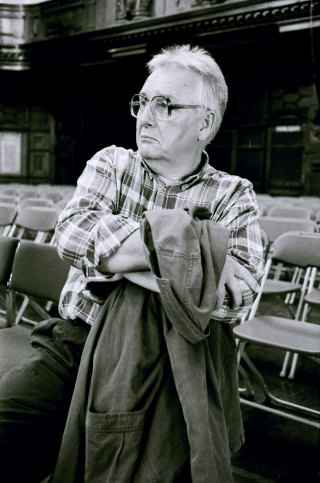
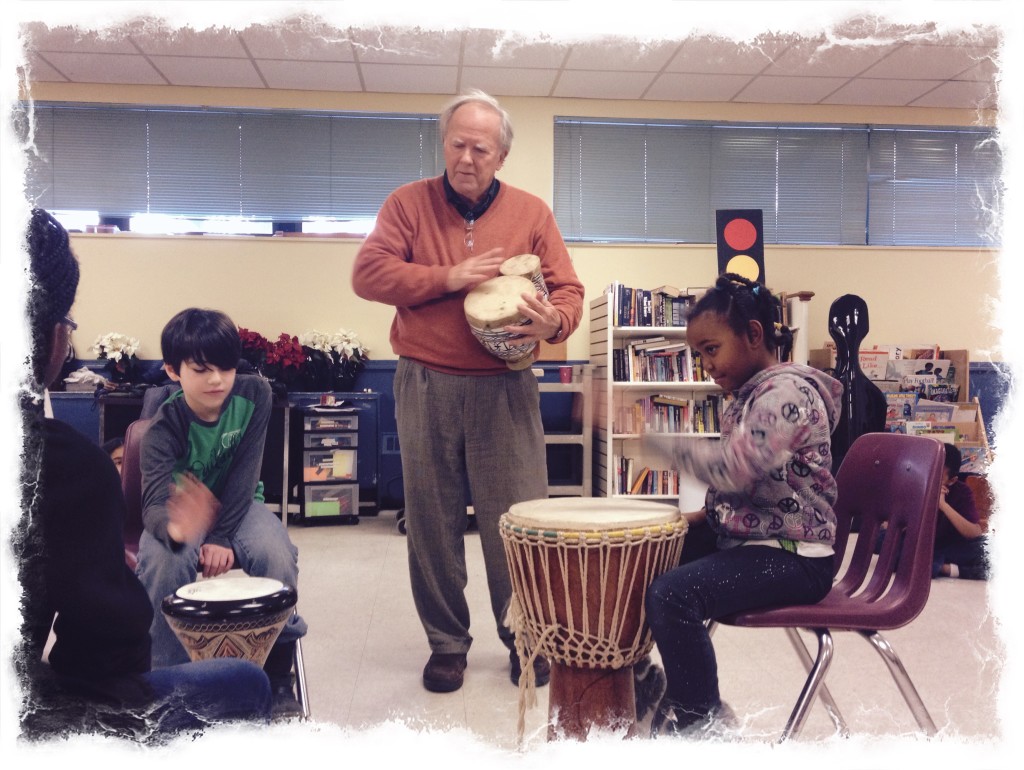
Mark at DOP 1 3-2015

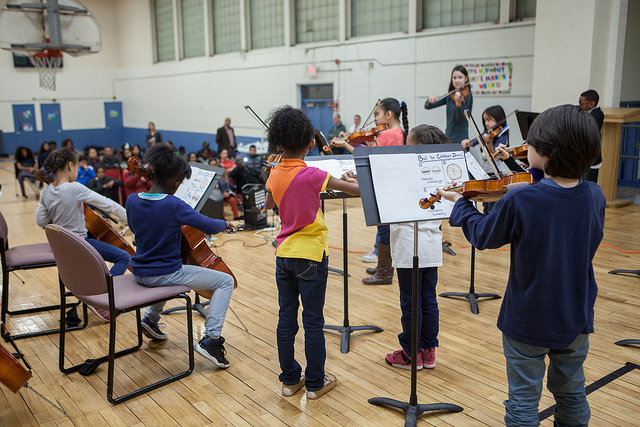
Last Friday the members of the Daily Orchestra Program eagerly welcomed our dear friend and CMW board member Mark Hinkley for the first time in 2015. “Mr. Mark,” as we fondly call him, has been leading us in improvisation activities and helping us to think outside the musical box since the program’s pilot year in 2012. Every week we play improvisation games on Fridays, and Mark’s periodic Friday visits are always a special treat.

Last Friday was all about beat, rhythm, and listening for what might be missing. Mark brought in some very cool drums gathered from all over the world and chose groups of three to improvise with each other on those drums. Jimmyla was assigned the “heartbeat.” She drummed a bold but steady beat on her large drum. Gavin listened intently for what might be missing, and after some thought he added a faster moving repeating pattern. Then, after listening and contemplating what she could add to the mix, Mary joined with her own dotted rhythms complementary to the drumming patterns of the other two. “Mr. Mark” then shook things up with complex, irregular rhythms on his double drum. They were jamming!

The moments I have to step back and admire my students are always heartwarming. As I watched each small group listen to each other and work together thoughtfully to create their own piece of music, I had one of those treasured moments of realizing how far they have come and how much they have grown individually and together through music.

We hope to see Mr. Mark again very soon!

–Lisa Barksdale
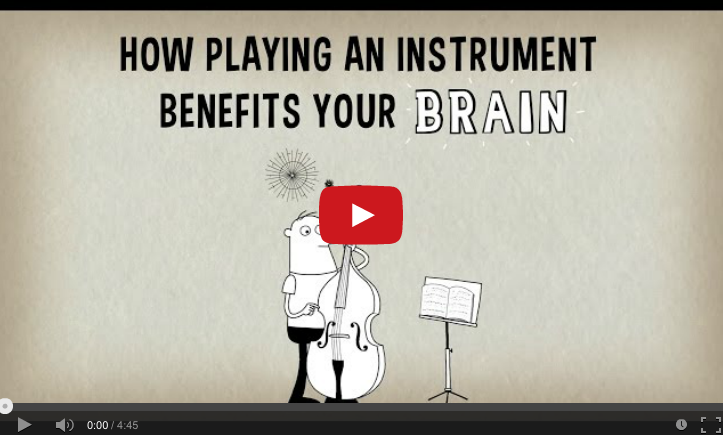
How Playing an Instrument Benefits Your Brain

Ever wonder what goes on in the mind of a musician?

From the folks at TED:
When you listen to music, multiple areas of your brain become engaged and active. But when you actually play an instrument, that activity becomes more like a full-body brain workout. What’s going on? This TED-Ed video explains the fireworks that go off in musicians’ brains when they play, and examines some of the long-term positive effects of this mental workout.

Screen shot 2015-03-03 at 3.43.32 PM

Music Is All Around

Jayden

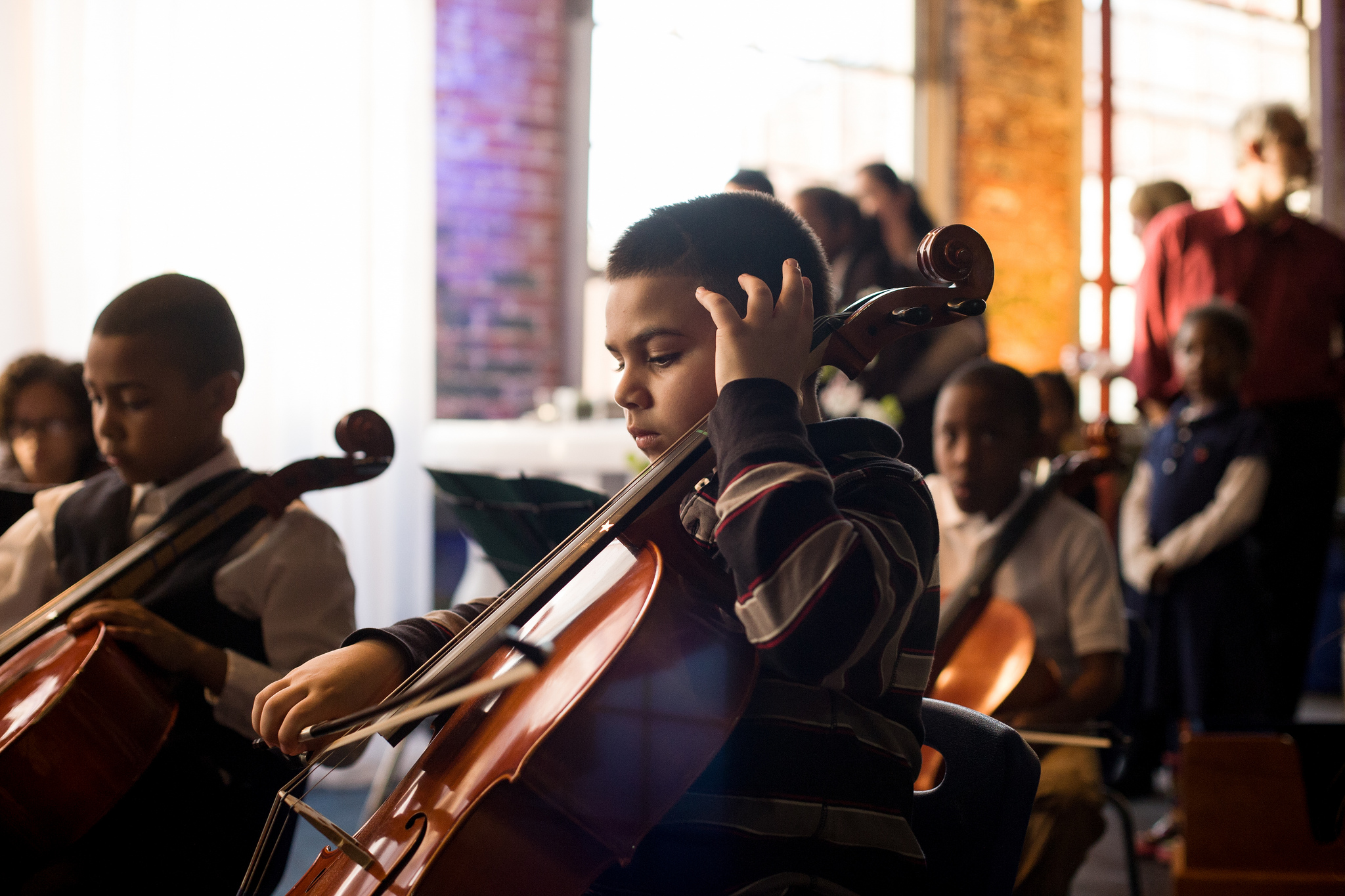
Jayden, a cello student in the Daily Orchestra Program surprised me the other day when he said in a tone of frustration, “It’s going to snow more, and school’s going to be closed again!” I always liked the snow when I was a kid (and I still do). “What’s wrong,” I asked, “don’t you like snow days?” “I do,” he explained, “I just don’t like missing music!”

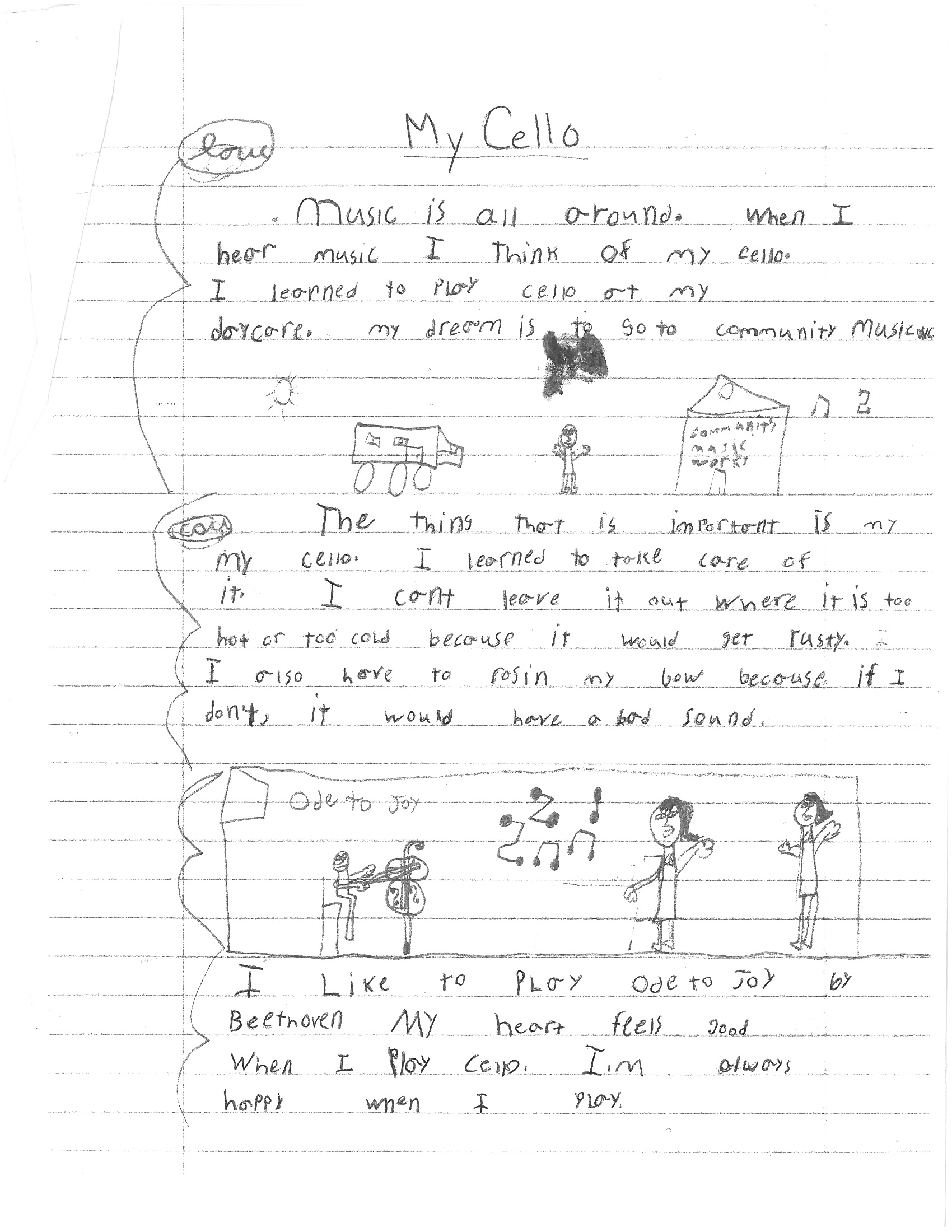
I shouldn’t have been surprised, as Jayden has shown a lot of motivation to learn as much as he can in the orchestra program. Daily Orchestra Program students don’t take their instruments home, but Jayden recently taught himself to play May Song at home in his head from a YouTube video, and then surprised me by playing it for me on his cello after orchestra rehearsal. Now he has started memorizing songs he learned to play on the recorder at school so he can play them on the cello when he comes to orchestra. I’m touched by Jayden’s enthusiasm for the cello, and our conversation reminded me of a school project he shared with me in the fall. I’ve included a copy of Jayden’s school project here- complete with illustrations.

–Adrienne Taylor

Jayden's cello project

A Month of “Sparkle”: Volunteer Nellie Freed

Nellie

Thank you, Nellie!

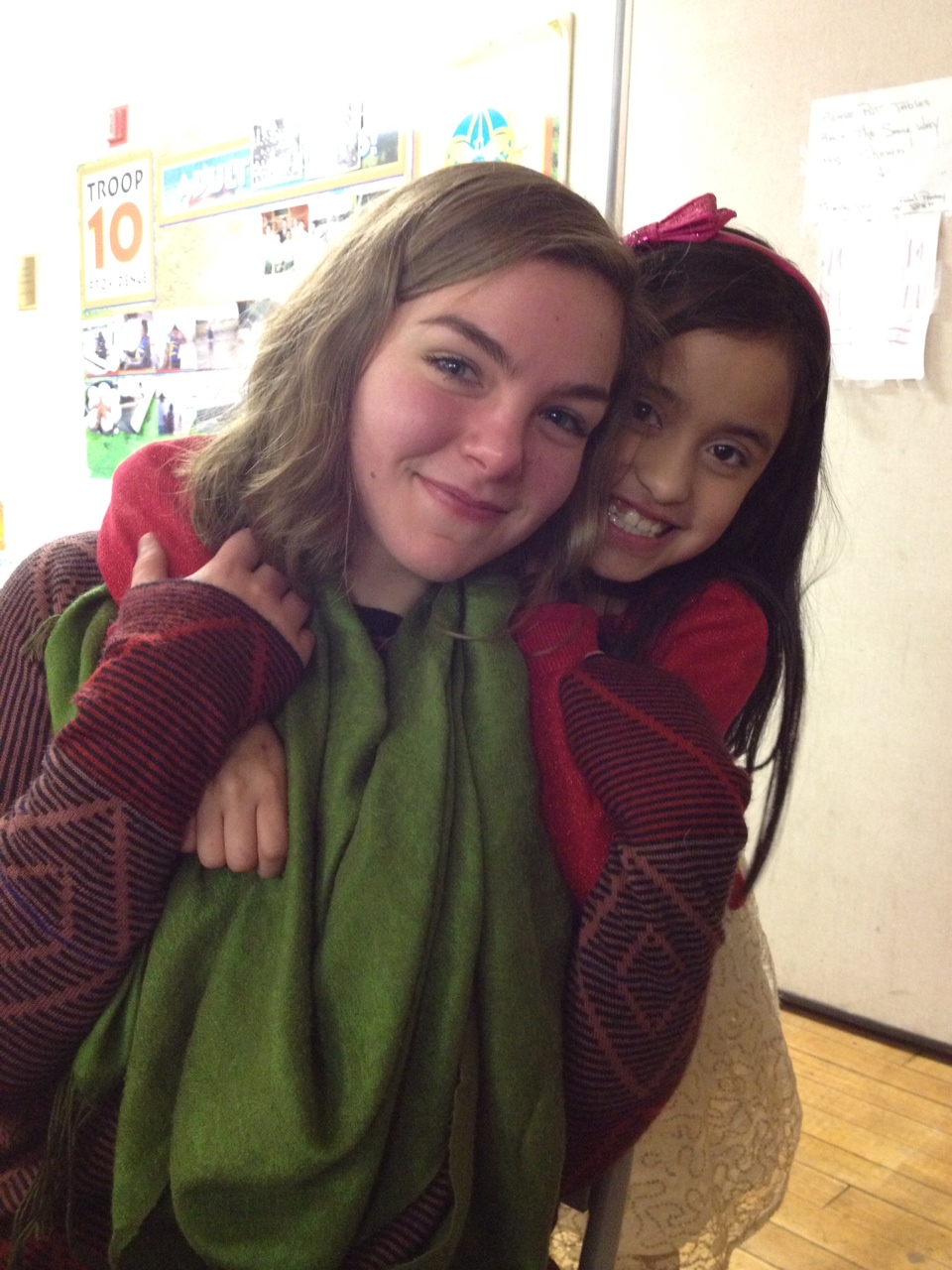
For the month of January, CMW was incredibly lucky to have Nellie Freed, a violist and Oberlin student, volunteer in the office and in lessons. Nellie worked tirelessly to update our waiting list – calling hundreds of families to make sure their information was up to date (and that they were still interested in music lessons!), as well as working on attendance spreadsheets and helping out in countless other ways.

Nellie also spent a lot of time working with the Daily Orchestra Program (apparently they nicknamed her “Sparkle”), and also working with Phase I+. We miss her already, and hope that she’ll be back to visit soon!!

–Chloe Kline

Just a Little Taller: A Daily Orchestra Program Moment

16065012936_e9f0963db0_z

“Wait, so do you have rehearsals too?” asked James as we both packed our violins into their cases. We had just finished a lesson, in which we had spent a lot of time focusing on being prepared. Rests are never idle in orchestra music, and James had worked very hard during the lesson to set his bow silently on the string during each rest in order to be ready for his turn to play. At the end I told him that being prepared is something I still have to think about during my own orchestra rehearsals. My statement must have sparked his curiosity.

I responded to his question, “Yes, definitely. Sometimes I rehearse with other people at Community MusicWorks. Sometimes Adrienne and I play together. Sometimes I even have rehearsals with really large orchestras. Of course I also practice every day to make sure I can play as well as I want to.”

James looked thoughtful and responded “Hmmmm. So you’re just like us really!”

“Yes!” I agreed and then added “ just a little taller” as we shared a laugh on our walk down the hallway towards the orchestra room.

It’s these moments of connection with my students that remind me of what Community MusicWorks is all about!

–Lisa Barksdale

The Sound of Stones (and other things)

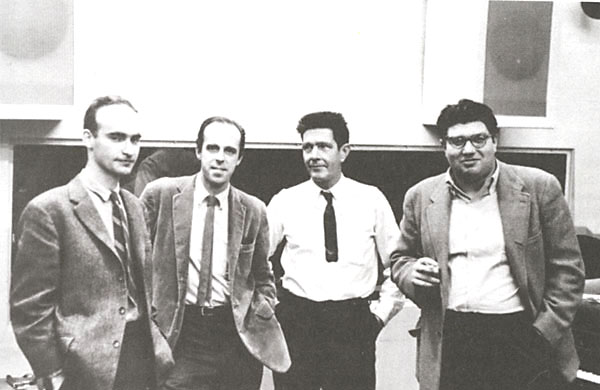
Christian Wolff, Earle Brown, John Cage, and Morton Feldman, Capitol Records Studio, New York City, ca. 1962

Christian Wolff, Earle Brown, John Cage, and Morton Feldman, New York City, ca. 1962

On January 31 or February 1 you’ll have the chance to hear music you may have never heard before and may never hear again: CMW presents the third installment of Ars Subtilior, a series on subtlety in experimental music curated by yours truly.

This concert will feature music by three icons of twentieth century experimental classical music: John Cage, Morton Feldman, and Christian Wolff. My guess is that you’ve definitely heard of one of these guys (Cage), might have heard of the other guy (Feldman), and probably never heard of the other (Wolff). Funny thing is, both Cage and Feldman were greatly influenced by Wolff and no wonder, he is quite the Renaissance man: a mostly self-taught composer, an organic farmer, a philosopher, and an expert on Euripedes (among other things). Also, I drank beer with him in Montreal just last year!

According to Wikipedia, Wolff recently said of his work that it is motivated by his desire “to turn the making of music into a collaborative and transforming activity (performer into composer into listener into composer into performer, etc.), the cooperative character of the activity to the exact source of the music. To stir up, through the production of the music, a sense of social conditions in which we live and of how these might be changed.”

In Wolff’s work Stones, performers are instructed to make various sounds with stones for an indefinite amount of time. There is some humor there (he asks the performers to not break anything) but all jokes aside, Wolff is asking all of us to just listen, to open our ears, and hopefully, our minds. It’s more than just the sound of stones you’ll be taking away from this experience.

Feldman is really one of my most favorite composers, gorgeous ethereal stuff. It’s a total honor to perform his music. I originally wanted to program his final chamber work,
Piano, Violin, Viola, Cello (1987), an 80+ minute tour de force, but I had a baby in the meantime and was advised to not take on any more endurance challenges by a much wiser co-worker (Chloe). I’m glad I listened to her because I then came across his much shorter, but equally beautiful work, Four Instruments.

The other composition of Feldman’s on this program, Durations 2 for cello and piano, is an all time favorite and was actually my first introduction to his work. I took part in a modern music cello seminar one summer and each of the participants played through the piece, one person each day, and it never sounded the same. It’s not that we each made the piece our own, it’s not about the personality of the performer coming out, it’s about the aural memory of the listener. He directs the performers to choose the duration of each sound and this in turn confuses the listener’s musical awareness of what had come before. A sort of musical drunkeness, but no hangover.

And who doesn’t like Cage? Ok…lots of people, but I think everyone will enjoy Six Melodies because there are actual melodies and they will be tenderly played by Jesse and Sakiko. Music for Amplified Toy Pianos will be fun.

And yes, it’s okay to have fun at these events. Hope to see you there!

–Laura Cetilia, CMW resident musician and curator, Ars Subtilior

Check our calendar for event details

Come Sing With Us!

15571764803_241989f285_z 16165748726_63c87b1dda_z

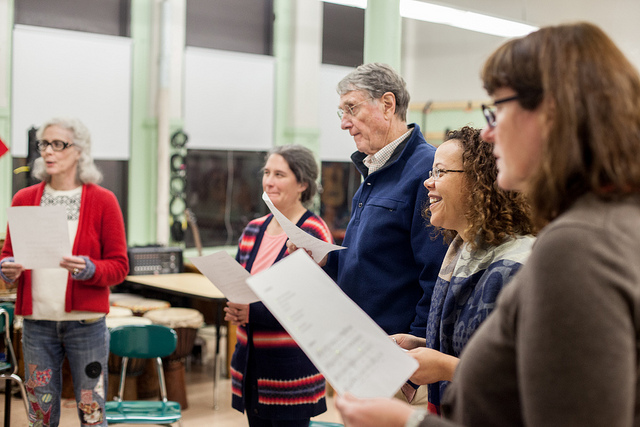
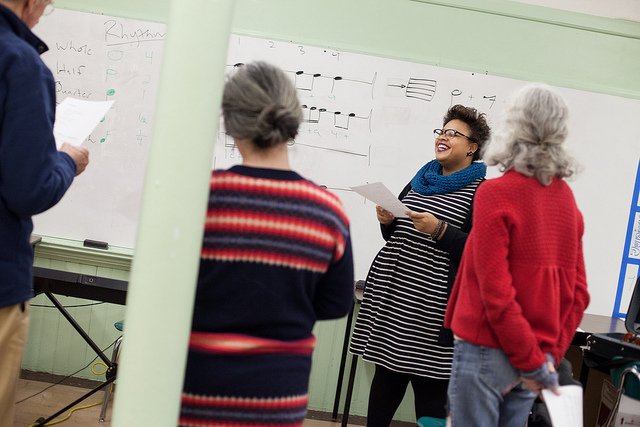
Kill-joy January wants you to stay home and sulk as you shiver. Resist. Instead, join our circle of fun, friendly people, draw in a deep breath and sing your winter blues away. That’s exactly what a handful of CMW parents, board members and friends have been doing for the past two months. We are led by CMW alum Alexis, an experienced chorister and excellent musician (no surprise there, she was trained by the best). Our goal is to learn a little bit about music and singing, enjoy each other’s company and make a joyful noise.

So far, we have sung Dona Nobis Pacem, an ancient tune in the original Latin; two intriguing rounds by Moondog, the NYC street musician famed for his Viking helmet and self-built instruments; the CMW theme song; and This Is My Song (A Song Of Peace), a favorite of Board President David Bourns. Next up: A Spanish folk tune. Somehow, no matter what we sing or how tentatively we begin, joining voices together lights an inner fire that warms us through and through and keeps us coming back for more.

Don’t let January win. Come sing with us. You are welcome to drop in and out as your schedule allows. We meet during CMW’s regular All-Play Days most Tuesdays 5:30-6:30 at CMW’s home away from home, the Trinity Academy for the Performing Arts on Messer Street in Providence. For more information and a listing of upcoming meeting dates, contact parentcommittee@communitymusicworks.org.

–Linda Daniels

Hannah: The Right Place at the Right Time

16003972978_fa01090cdf_z

Hello world wide web!
I am Hannah, the not-so-new viola fellow at CMW! For better or worse, I have been charged with writing for the CMW blog, bringing me closer into the fold of the Millennial generation than ever before. Having not even had a xanga in 8th grade on which to post angsty song lyrics, I’m not entirely sure how this whole blogging thing works. Most blogs I read involve food, which means they involve pictures, which means I actually don’t have to read at all.

In any event, it is today, on a bright and cold Wednesday afternoon, that I make my first entry on the inter webs. It was 377 days ago that I first heard about CMW. Before then, Rhode Island was not exactly at the forefront of my mind. It blended in nicely with the other states in New England that are on the Bolt Bus route to Boston from NYC. I may have even been slightly surprised to discover Rhode Island is in fact connected to the mainland USA. Basically, I knew nothing. But I applied for CMW because hey, I was graduating from my masters degree and I did NOT want to stay in the cesspool of misery and despair that is NYC on a student budget. I was also drawn to the idea of teaching, performing, and being within a community of people who believe in the power of music as a vehicle of change in the world. Despite a case of nasty food poisoning (a story for another post, I think), I auditioned, interviewed, and ended up being offered the position.

My realization of the week is that we’re always in the right place at the right time. A year ago, Rhode Island didn’t exist in my world. Now I live here. I still don’t know much about it. But I’ll keep learning. The right time and the right place are now and I’m excited to see where the next year and a half takes me on the Road to Rhode Island (Family Guy? Anyone?)! My next post may be about banana bread…or knitting. Thrilling stuff, really. Until then!

–Hannah Ross, Viola Fellow ’14-’16

Learn more about Hannah and her fellow Fellows on our staff page.

Students

Teachers

Classes

Performances, Events, Projects