Blog

Boston Globe: Ueno’s “Inventive New Work”

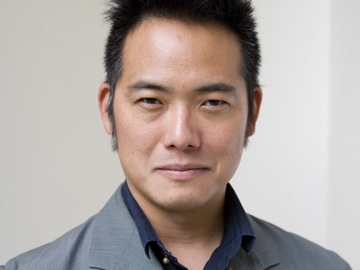
In anticipation of this weekend’s series of events premiering the Community MusicWorks commissioned piece by Ken Ueno, the Boston Globe published this teaser for Ueno’s “inventive new work”:

“Four Contemplations” takes as its subject the museum’s ancient Dainichi Buddha and will unfold in three iterations. Ueno and 11 MusicWorks players will play the piece on Thursday in four 30-minute chunks in the museum’s Asian art galleries. The following Sunday, they will present it as an hourlong piece in the museum’s concert hall. The music will be recorded during these performances and at a later date will be accessible on the museum guide in the galleries. The piece was not only inspired by the Dainichi Buddha and by meditation practices but was also “influenced by my recent attempts to compose music specific to architectural spaces and people moving through those spaces,” Ueno wrote in an e-mail.

Learn more about each event and make your reservations here.
How to Think About Oneness: Let Us Count the Infinite Ways

ken-ueno-web

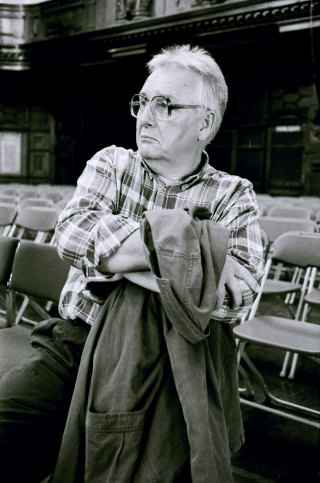
Give composer Ken Ueno five minutes and he can find a way to link Buddhism, Mongolian throat singing and Robert Kennedy. Give him another five and he’ll weave in molecular gastronomy and gang violence. Next he’ll add James Joyce and Ovid, the Roman writer. If his life takes this form of polyglottal all-inclusiveness, then so does his art. If nothing is out of bounds, then everything is drawn into his art.

What’s fascinating is that Ueno’s theme, when he comes to Providence later this month, is meditation. Traditionally meditation acknowledges our flurry of stimulating ideas, desires, ambitions, and asks us to narrow down, focus and ultimately empty the mind to achieve a state of unity and release. With Ueno’s energy, it might be challenging for him to calm his creative system. But the other part of the visionary meditative state is the realization that everything is connected, part of the One. And Ueno’s passion is definitely for making connections.

Ueno’s “Four Contemplations,” commissioned by Community MusicWorks and presented from March 26-29, will be total immersion into Ueno’s fascinating, floating world. The work will initially be set in the RISD Museum, where eleven classical players in Community MusicWork will perform in 30-minute segments while moving around the Asian galleries. Listeners will also be filtering in and out, music will bleed from one gallery to another. The vocals will be unlike any other: Ueno specializes in Tuvan throat singing and other radical vocal extensions. Presiding over the world of difference will be RISD Museum’s treasure the Great Buddha who, due to renovation, was absent and is now returning to presence.

Known as a cross-disciplinary composer, Ueno’s jumping off point was the Dainichi Nyorai Buddha in state of bliss. His four segments correspond with the four main dharmas of meditation: contemplation on mindfulness, body, feelings, and thoughts. While not a practicing Buddhist like his father, Ueno’s extended vocal techniques require great discipline of breathing, which easily makes the connection with meditation.

Born to Japanese parents in the US, Ueno has lived in Japan, Switzerland, Brussels, Paris, Rome and Berlin. He spent a year in Providence teaching at UMass Dartmouth and is now living in Berkeley, CA. “I’ve been in exile my whole life,” he says.

This sense of the cosmopolitan ungroundedness is part of the impetus of his cosmopolitan creation. “Sometimes I feel both Japanese and American, sometimes neither. ‘Not belonging’ is my natural state. Art has helped me create a center, an autonomous sense of self. My art practice organically floats between architecture and sound and improvisation and written music and classical, experimental noise,” he says.

During the weekend, Saturday’s All Saints concert will be an interactive event with CMW musicians and students. How will the students approach throat singing, which stems from an ancient Mongolian tradition, and his soundscapes? Ueno, who is a professor of music at UC Berkeley, dislikes talking down to people of any age, race or class. He remembers how silly adults used to speak baby talk when he perfectly understood their words. He advocates that meaning in art, when authentically created, can be understood by any audience. Feeding people sweet Hollywood melodies guarantees they will only understand sweet Hollywood melodies.

Ueno cites an experience from his younger days while teaching in a halfway house for delinquent teenagers and former gang members. While Ueno gained respect, keeping the students’ attention was a trial. His moment of revelation came unexpectedly. One day he played a recording of “Quartet for the End of Time,” a notoriously difficult chamber music piece written by Oliver Messiaen. During those 6 1/2 minutes, the students were held in rapt attention. It was the only time the class was silent. Once it ended, he told them that the music had been premiered in 1941 when Messiaen was a POW camp in Görlitz, Germany after being captured by the Nazis. The gang members had already grasped the essence of the shared experience, through their own months of incarceration. “If the music is good enough, it doesn’t matter how radical it is.  It can communicate to almost anyone.”

As challenging as his music might be, Ueno is a believer in its beauty and power. “If you work from an authentic point of view of something that affects you, that honesty and earnestness will translate. I write music I think is beautiful. It is weird, sure. There are other things about sound, discovering sound, inventing technique that might be unusual. The lesson is: radical need not be uncomfortable.”

–Jill Pearlman

Jill Pearlman is a writer of fiction, poetry and journalism. Her in-progress novel, Clio’s Mobile Home, is based on her experiences as a music journalist in New York in the ’90s. Her blog about art, aesthetics and ecstasy can be found at http://jillpearlman.com.

More information and links to reservations for Four Contemplations events here.

Phase II at Musical Flexplorations

Ph11SWAP

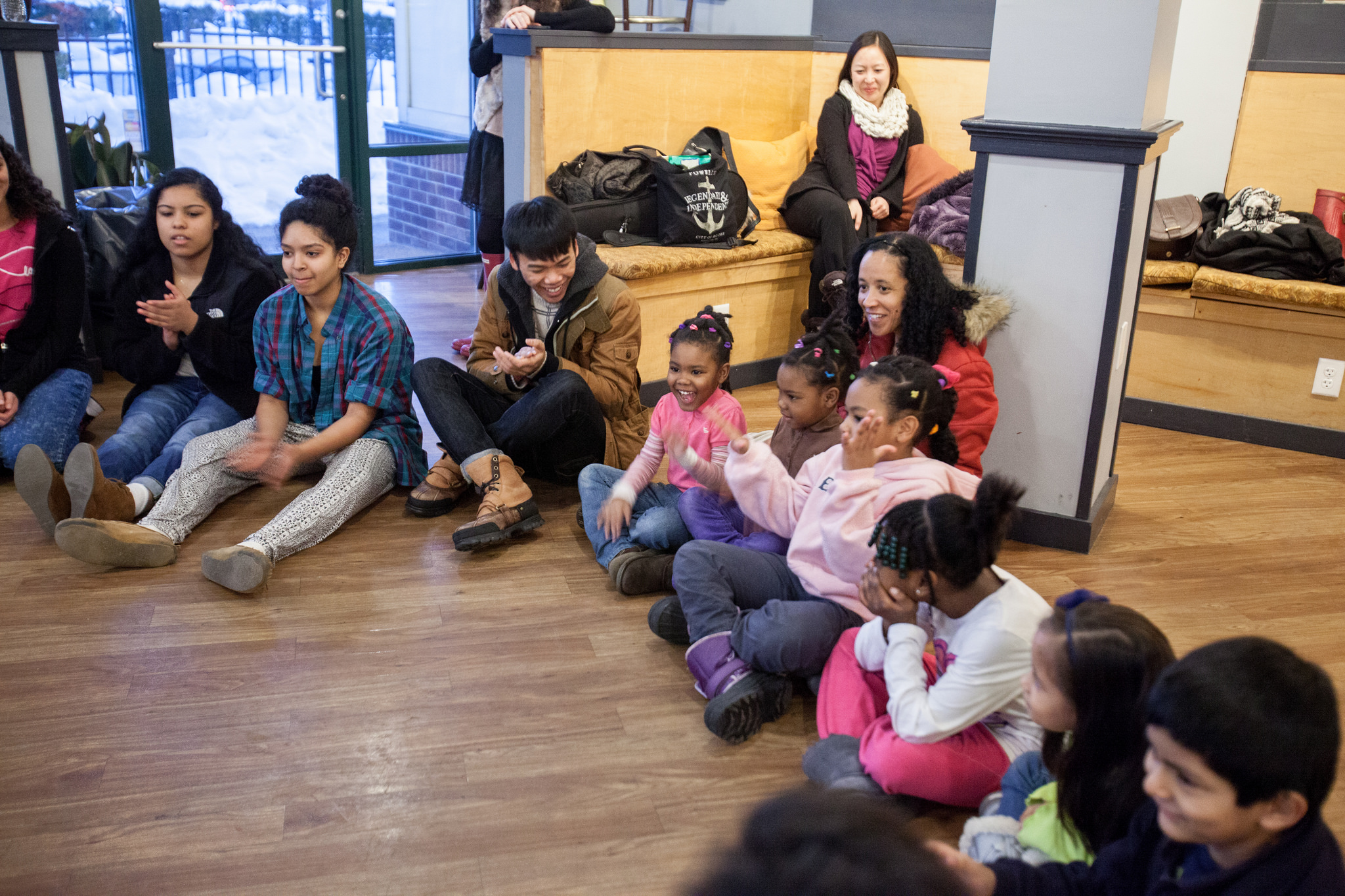
Last Friday, Phase II guest taught CMW’s Drop-In class, Musical Flexplorations. We had a great time introducing some wonderful kids and their parents to the Phase II experience – playing and listening to music, eating dinner together, and engaging in discussion.

PHIISWAP2

Among other activities, Jesse taught the basics of rhythm machine to our young friends, and Federico and Nohely explored the concepts of rules and fairness through a cookie-based activity.

PHIISWAP3

It was a lot of fun, and we were well rewarded with hugs after the group dinner. Hopefully, we’ll see all of the drop-in kids with CMW instruments in their hands before long!

–Chloe Kline, with Phase II

Beat, Rhythm and Listening with Mr. Mark

Mark at DOP 1 3-2015

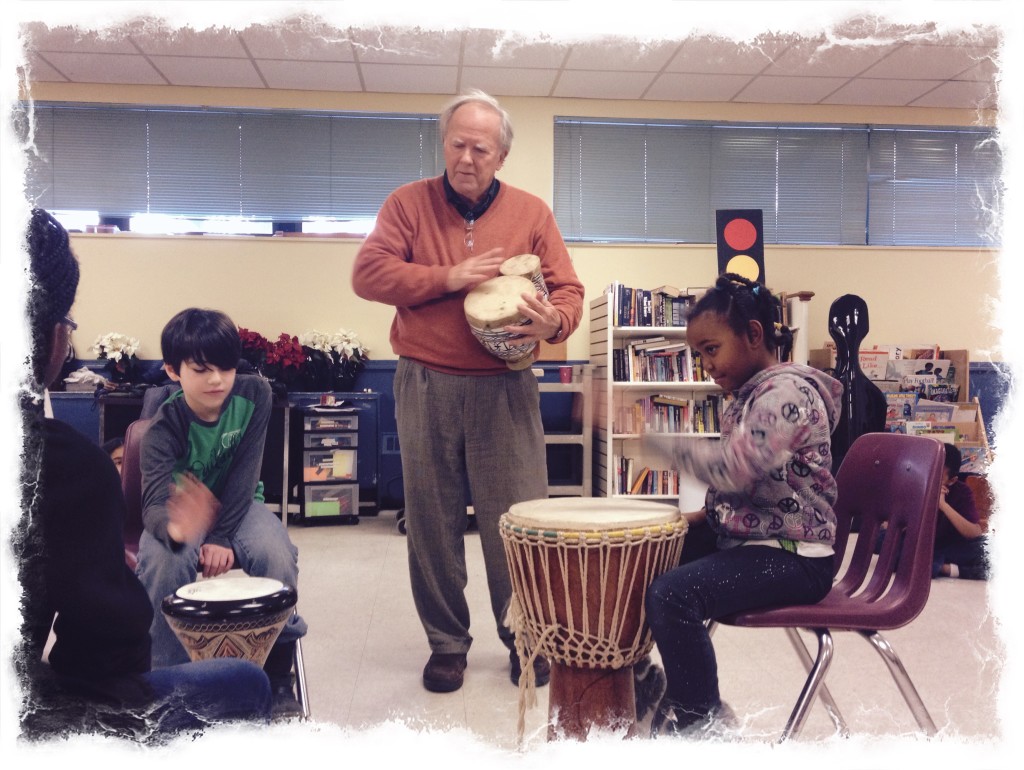
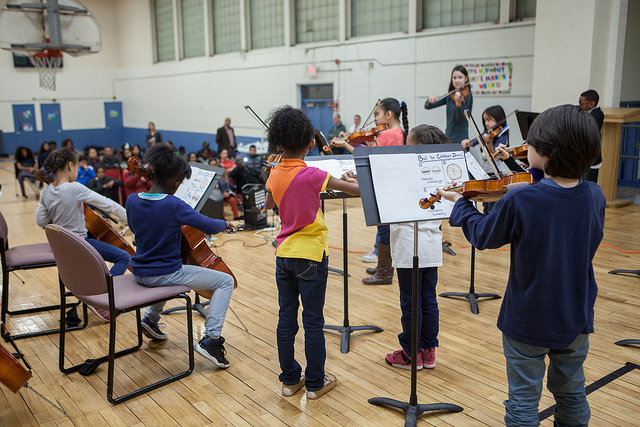
Last Friday the members of the Daily Orchestra Program eagerly welcomed our dear friend and CMW board member Mark Hinkley for the first time in 2015. “Mr. Mark,” as we fondly call him, has been leading us in improvisation activities and helping us to think outside the musical box since the program’s pilot year in 2012. Every week we play improvisation games on Fridays, and Mark’s periodic Friday visits are always a special treat.

Last Friday was all about beat, rhythm, and listening for what might be missing. Mark brought in some very cool drums gathered from all over the world and chose groups of three to improvise with each other on those drums. Jimmyla was assigned the “heartbeat.” She drummed a bold but steady beat on her large drum. Gavin listened intently for what might be missing, and after some thought he added a faster moving repeating pattern. Then, after listening and contemplating what she could add to the mix, Mary joined with her own dotted rhythms complementary to the drumming patterns of the other two. “Mr. Mark” then shook things up with complex, irregular rhythms on his double drum. They were jamming!

The moments I have to step back and admire my students are always heartwarming. As I watched each small group listen to each other and work together thoughtfully to create their own piece of music, I had one of those treasured moments of realizing how far they have come and how much they have grown individually and together through music.

We hope to see Mr. Mark again very soon!

–Lisa Barksdale

How Playing an Instrument Benefits Your Brain

Ever wonder what goes on in the mind of a musician?

From the folks at TED:
When you listen to music, multiple areas of your brain become engaged and active. But when you actually play an instrument, that activity becomes more like a full-body brain workout. What’s going on? This TED-Ed video explains the fireworks that go off in musicians’ brains when they play, and examines some of the long-term positive effects of this mental workout.

Screen shot 2015-03-03 at 3.43.32 PM

Music Is All Around

Jayden

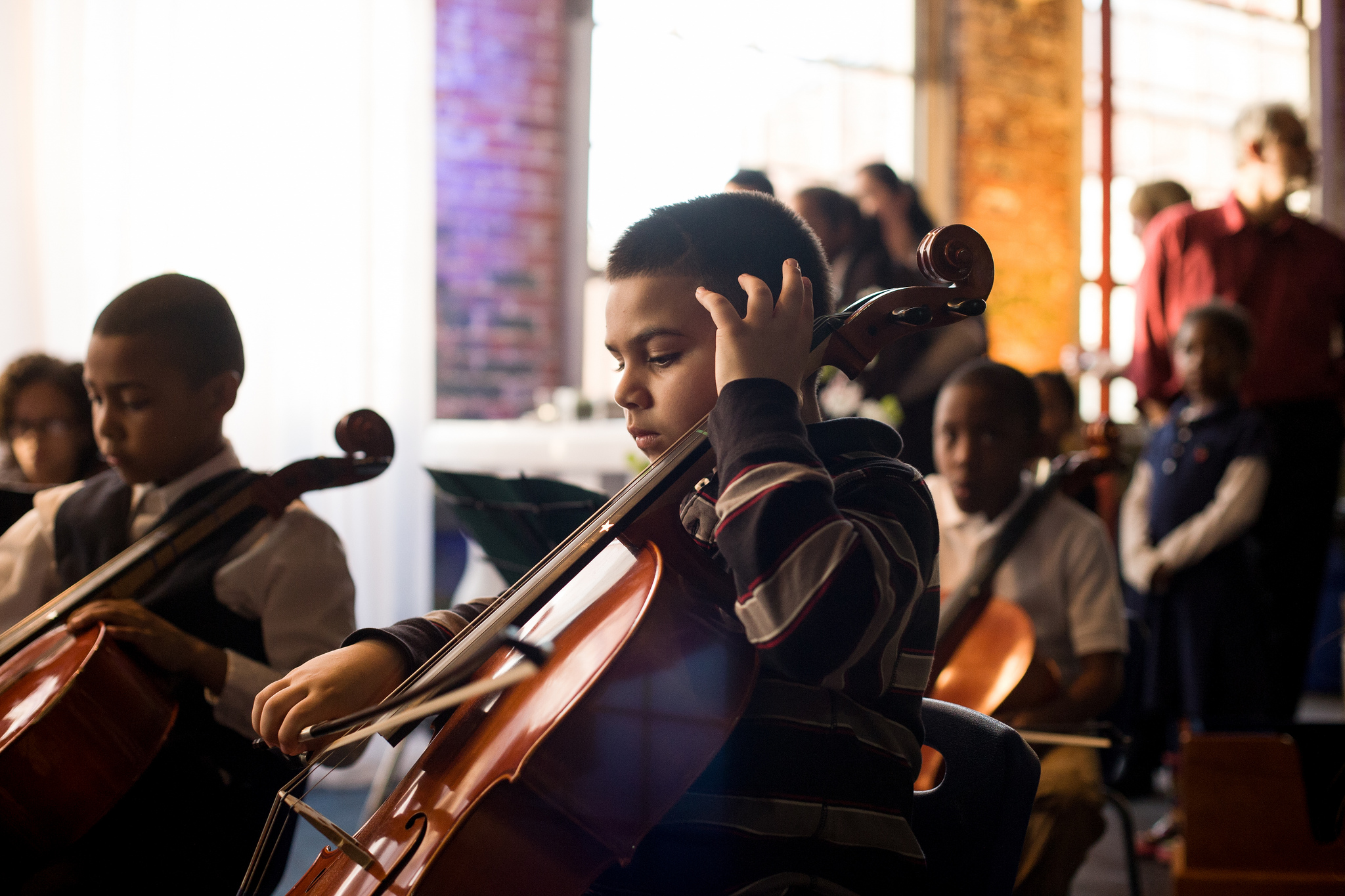
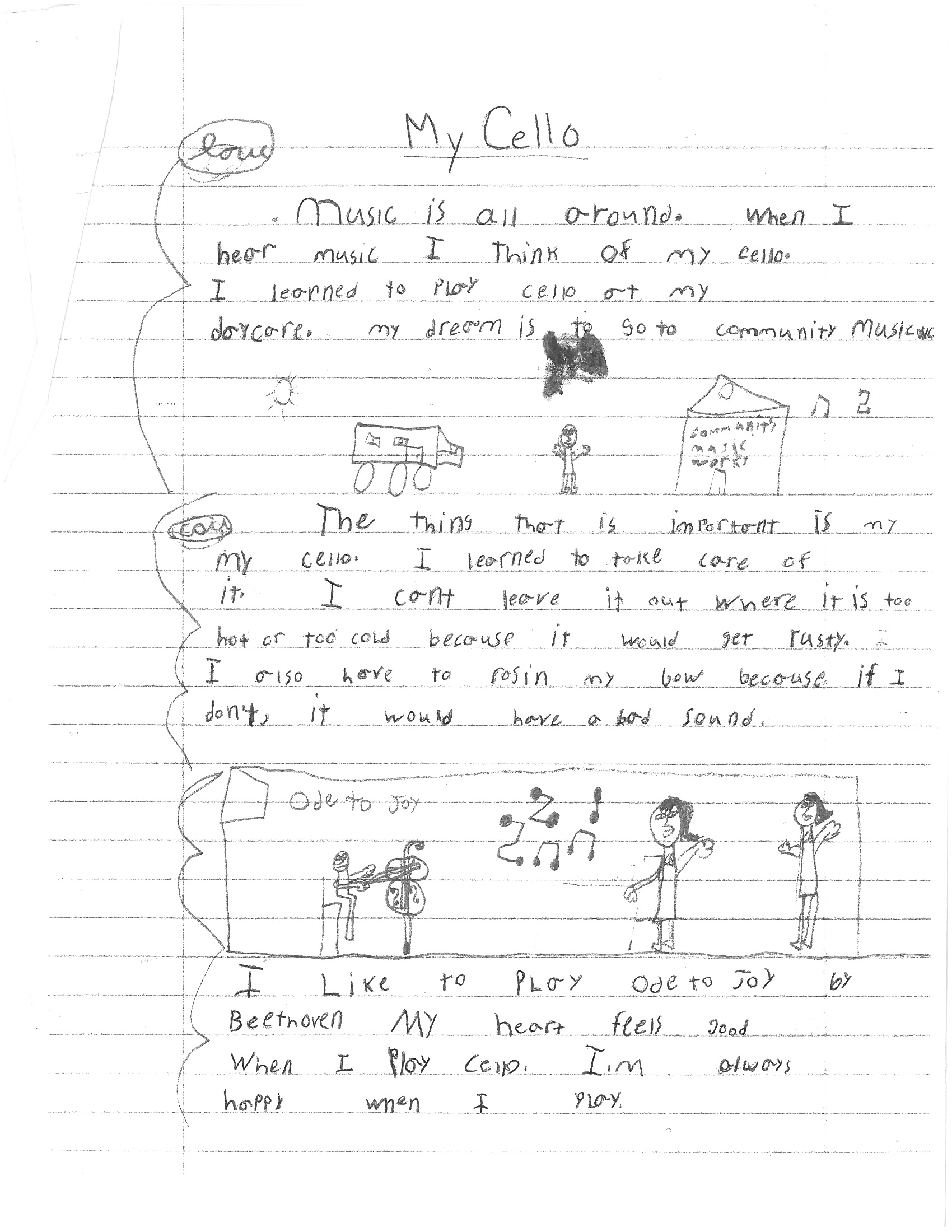
Jayden, a cello student in the Daily Orchestra Program surprised me the other day when he said in a tone of frustration, “It’s going to snow more, and school’s going to be closed again!” I always liked the snow when I was a kid (and I still do). “What’s wrong,” I asked, “don’t you like snow days?” “I do,” he explained, “I just don’t like missing music!”

I shouldn’t have been surprised, as Jayden has shown a lot of motivation to learn as much as he can in the orchestra program. Daily Orchestra Program students don’t take their instruments home, but Jayden recently taught himself to play May Song at home in his head from a YouTube video, and then surprised me by playing it for me on his cello after orchestra rehearsal. Now he has started memorizing songs he learned to play on the recorder at school so he can play them on the cello when he comes to orchestra. I’m touched by Jayden’s enthusiasm for the cello, and our conversation reminded me of a school project he shared with me in the fall. I’ve included a copy of Jayden’s school project here- complete with illustrations.

–Adrienne Taylor

Jayden's cello project

A Month of “Sparkle”: Volunteer Nellie Freed

Nellie

Thank you, Nellie!

For the month of January, CMW was incredibly lucky to have Nellie Freed, a violist and Oberlin student, volunteer in the office and in lessons. Nellie worked tirelessly to update our waiting list – calling hundreds of families to make sure their information was up to date (and that they were still interested in music lessons!), as well as working on attendance spreadsheets and helping out in countless other ways.

Nellie also spent a lot of time working with the Daily Orchestra Program (apparently they nicknamed her “Sparkle”), and also working with Phase I+. We miss her already, and hope that she’ll be back to visit soon!!

–Chloe Kline

Just a Little Taller: A Daily Orchestra Program Moment

16065012936_e9f0963db0_z

“Wait, so do you have rehearsals too?” asked James as we both packed our violins into their cases. We had just finished a lesson, in which we had spent a lot of time focusing on being prepared. Rests are never idle in orchestra music, and James had worked very hard during the lesson to set his bow silently on the string during each rest in order to be ready for his turn to play. At the end I told him that being prepared is something I still have to think about during my own orchestra rehearsals. My statement must have sparked his curiosity.

I responded to his question, “Yes, definitely. Sometimes I rehearse with other people at Community MusicWorks. Sometimes Adrienne and I play together. Sometimes I even have rehearsals with really large orchestras. Of course I also practice every day to make sure I can play as well as I want to.”

James looked thoughtful and responded “Hmmmm. So you’re just like us really!”

“Yes!” I agreed and then added “ just a little taller” as we shared a laugh on our walk down the hallway towards the orchestra room.

It’s these moments of connection with my students that remind me of what Community MusicWorks is all about!

–Lisa Barksdale

Students

Teachers

Classes

Performances, Events, Projects