Blog
DC trip update: Our rideDC trip update: Lunch by Linda!
DC trip update: bypassing ManhattanDC trip update: 12 pm, approaching NYCCMW’s musical block party
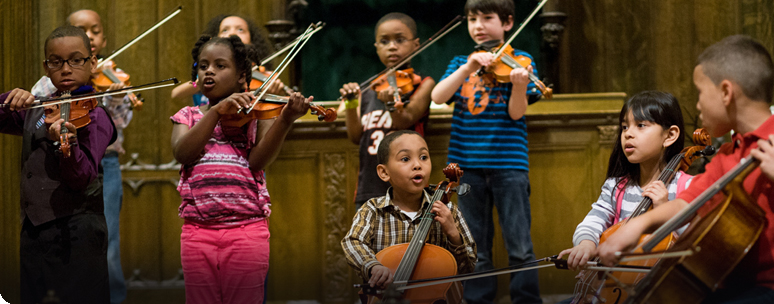
On Friday afternoon, the eastbound lane of Westminster Street in front of the CMW storefront will be closed off for an hour-long celebration of our recent national recognition, and we need you to come jam with us! Get out that old instrument (or noisemaker, kitchen utensil, pot/pan, etc) and join CMW for a community musical jam session! We'll have a few instruments on hand too, as well as some free food, stickers, balloons, and more. The Mayor will speak, and Big Nazo will surely be entertaining. Considering the name of this event, probably best to avoid Westminster Street by taking Broadway or the Point Street Bridge if you are traveling by car. Plenty of parking at the Dexter Training Grounds, one block behind the CMW store front office. We hope you'll come out and celebrate with us! Join us in Washington, DC?On Wednesday, October 20, a merry band of CMW student and professional musicians are taking Anthem on tour to Washington, DC. During National Arts and Humanities Month, we're planning several performances of Anthem in our nation's capitol (including a symbolic performance on the National Mall and a presentation for students at the Sitar Arts Center), and you're invited to join us! [10/18 update: download performance details here.] While all the details of our day in DC are yet to be fully resolved, we do know that we'll be boarding a 55-seat bus (yes, the one in the photo) on Tuesday morning, October 19 bound for Washington, and returning on Thursday, October 21. Since will be extra seats available on the bus, we'd like to extend an open invitation to our friends and supporters to join us on this adventure. And if you live in New Haven, NYC, or Philadelphia, or anywhere else along Interstate 95 between Rhode Island and Maryland, we'll try to include you too! Fine print: You'll need to find your own accomodations and finance your own meals, and we'll ask you to consider making a small donation to help us pay for the bus rental. Intrigued? If you want to know more, contact Heath Marlow, CMW's Managing Director, by email (heath@communitymusicworks.org) or phone (401.861.5650). CMW profile on All Things Considered
Youth Arts Day photosJori recently completed a book, available for $13 from Blurb.com, documenting the Providence Youth Arts Collaborative's Roots & Rituals: A Creative Day for Creative People. This first-of-a-kind youth-led event was held on May 22 at AS220 and billed as a "free collaborative arts and media day where you can make cool stuff, learn about local youth arts organizations, and see expressive performances."
National Arts and Humanities MonthOctober is National Arts and Humanities Month, and Americans for the Arts has provided a list of 10 simple things parents can do to "get more art into their kids' lives." In the words of President Obama, "our strength as a Nation has always come from our ability to recognize ourselves in each other, and American artists, historians, and philosophers have helped enable us to find our common humanity. Through powerful scenes on pages, canvases, and stages, the arts have spurred our imaginations, lifted our hearts, and united us all without regard to belief or background." Americans for the Arts has also published a listing of National Arts and Humanities Month events around the country. A century of American string quartets
At the height of the Romantic era, composers such as Liszt, Wagner, Mahler, Strauss, and Schoenberg had pushed the harmonic language of classical music to its limit with their emotionally charged chromaticism. In fact, Liszt, Wagner, and Schoenberg even saw possibilities that lay beyond the major/minor tonal system. As early as 1856, the iconic opening bars of Wagner’s Tristan und Isolde envisaged a new harmonic order that was to come 52 years later. Indeed, with Schoenberg’s Drei Stucke, composed in 1908, the fetters of harmony came undone with the first examples of completely atonal music, much to the shock of audiences worldwide. The music world would never be the same, as this bold move opened up many new avenues of compositional thought, and expanded the aesthetic palette of classical music beyond measure. This year, thanks to an American Masterpieces grant from the National Endowment for the Arts, the Providence String Quartet will follow four pathways taken by four different composers during the 20th Century. The earliest piece dates from 1896, and the latest from 1994. Each composer took a road less traveled, and for the genre of the string quartet, that has made all the difference. Charles Ives: String Quartet No. 1 “From the Salvation Army” Written while a student at Yale, Ives’s first string quartet is a compilation of material written for his composition class, and music composed for liturgical use at his college job as organist at a New Haven church. Revival hymns are the main source material in this work that remained unpublished during his lifetime. Samuel Barber: String Quartet, Opus 11 This early work was composed while Barber was studying at the American Academy in Rome. After its premiere in 1936, Barber retracted the final movement and created a new ending, substituting material from the first movement. The PSQ has been given special permission by Barber’s publisher and the Curtis Institute of Music to perform this largely unknown retracted movement. Steve Reich: Different Trains Minimalist composer Reich grew up during World War II traveling by rail between two homes, one in New York and one in Los Angeles. Years later, Reich had the realization that, as a Jew, had he been born in Europe instead of America, he would have been forced to ride on trains to his death. This programmatic work for string quartet and pre-recorded tape is based on interviews with Reich’s governess, a Pullman porter, and Holocaust survivors. Osvaldo Golijov: The Dreams and Prayers of Isaac the Blind Born in Argentina in 1960, Golijov’s composing style is influenced by the convergence of different genres. He grew up immersed in liturgical Jewish and secular klezmer traditions, Western European chamber music, and of course, being an Argentine, the passion of the tango. This work is for string quartet and klezmer clarinet, and it is inspired by the writings of Isaac The Blind, the Kabbalist rabbi of Provence. For performance dates, consult our website calendar. -Jesse Holstein, PSQ |