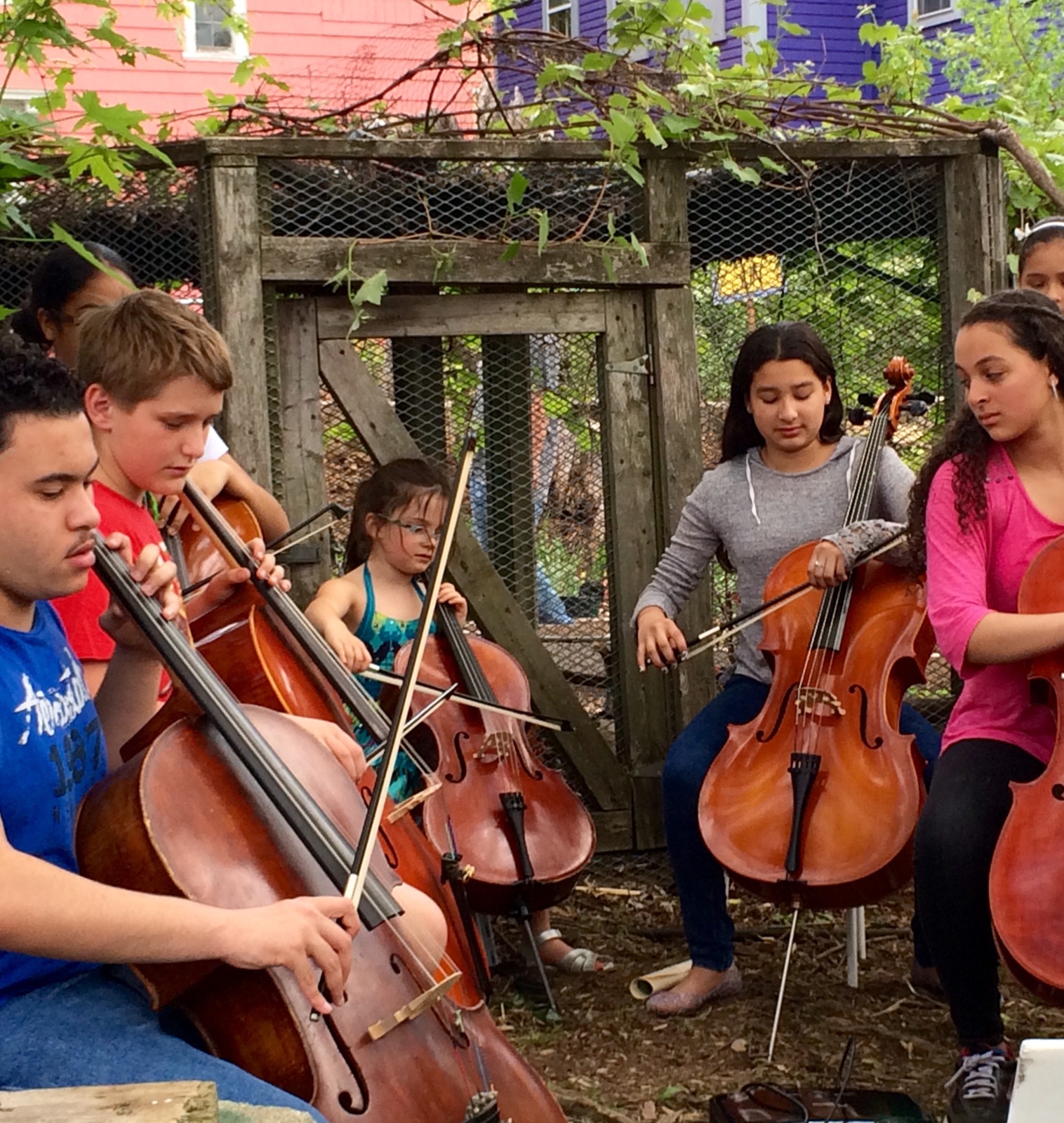
CMW cellists performed Sunday, May 17th at CityFarm’s annual plant sale. Every student received a plant, pot and soil as a thank you from City Farm’s Steward, Rich Pederson.
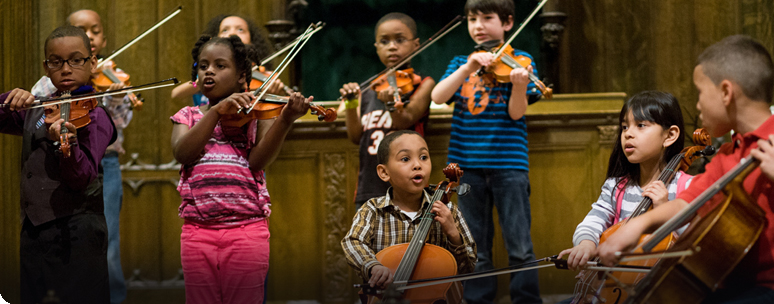
CMW Cellists Plant a Seed
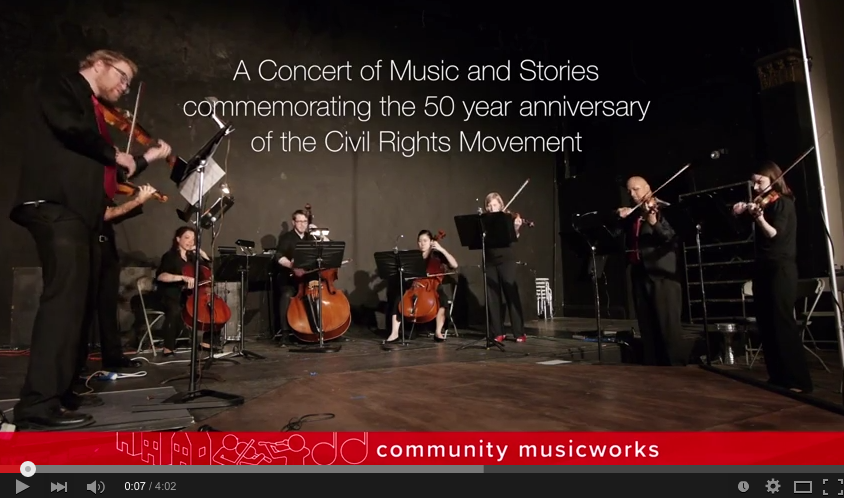
CMW cellists performed Sunday, May 17th at CityFarm’s annual plant sale. Every student received a plant, pot and soil as a thank you from City Farm’s Steward, Rich Pederson. Video Highlights from the Commemoration of the Civil Rights Act Concert EventIn case you missed this event from Saturday, here’s a lovely video from CMW’s YouTube page with highlights from our commemoration of the 50th anniversary of the events of the Civil Rights Act. Many folks gathered at the Southside Cultural Center to celebrate this collaboration with the Rhode Island Black Storytellers that featured the CMW Players with Daniel Bernard Roumain, along with a newly commissioned piece by Jessie Montgomery. The theme flows nicely into our End of Year Gala Performance! Join us in celebrating our students’ accomplishments as they perform for our year end gala in the fabulous Columbus Theatre. Our all-student CMW Symphony will celebrate “Voices of Civil Rights”, and we’ll also honor graduating seniors and fellows. Tuesday, May 26 at 6pm The Orchestra Fine-Tuning the Performance of School Students
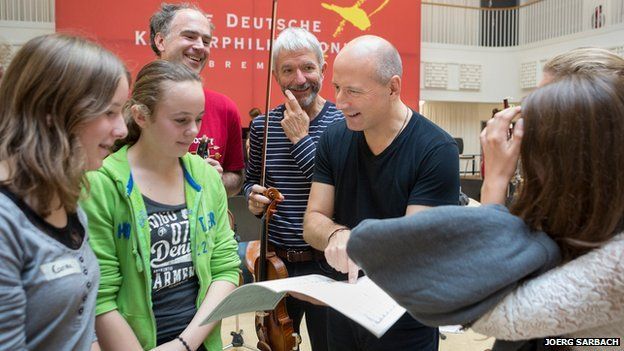
From the BBC news: Eight years ago, one of Europe’s best-known orchestras moved their rehearsal rooms to a secondary school on this housing estate and pupils from Tenever found themselves sharing their corridors and lunch tables with professional musicians. Since then the school’s results have improved, its drop-out rates have fallen to less than 1% and the atmosphere in the wider neighbourhood has been “transformed”, according to Joachim Barloschky, a local official who oversaw a programme of renovation and regeneration in the area. From Violinist to Physical Therapist: Arlyn Thobaben (Valencia)
“I believe that musicians who play an instrument should know that first and foremost, your own body is still your primary instrument!” Catch up with Fellowship Program graduate Arlyn Thobaben (her married name, we knew her as Arlyn Valencia), violin/viola (2007-2009), in this interview that recounts her transition from performing artist to healthcare professional. Spring Appeal: Double Your Gift with the Carter Match!Dear friends, As we warm to the emerging spring, Community MusicWorks celebrates our commitment to a definition of musicianship that graduating violinist, Andrew, says “helped to develop my voice, not only in the community of CMW, but in the community of the world.” In his new work, author David Brooks talks about the deep sense of purpose that comes from applying one’s talents to the “world’s great needs.” This concept resonates with the work we do at CMW and the orientation we provide our students: How can we be citizens of the world, and deploy our musicianship for the world’s needs? In particular, we have had a multi-year inquiry into the ways that musicianship can be a link to important social justice traditions. In May, Community MusicWorks will commemorate the 50-year anniversary of The Civil Rights Movement – the Civil Rights Act, Selma, the Voting Rights Act and more, as a way to converse with important voices of our past, and the issues of division and inequality we still face in our local communities. With your gift today, we can sustain this dialogue and continue to cultivate the voices of young musicians like Andrew: active and involved citizens inhabiting the world. Please join us in exploring the ways we bring music to bear on the world’s great needs, add young people’s voices to important inquiries into social justice, and create moments of beauty in our everyday lives. Sincerely, P.S. With your donation today, the Carter Family Charitable Trust will match all gifts to CMW up to a total of $75,000. Between now and June 1, you can double the impact of your gift. Make your online donation here, or mail your gift to:
Fellowship Reflection: The Experience of Curiosity
If you’re in New England right now, chances are it feels like winter will never end (even though it’s now “spring”). For me, that feeling is underscored by the knowledge that when the thaw comes, my time at CMW will be drawing to a close. I can’t quite wrap my head around the idea of saying goodbye to my students, my colleagues, and all my favorite places in Providence, but I’m also looking toward my next steps with a combination of excitement and trepidation. This was a good time, then, for me to have the Alternative Models Seminar, both to work out what I want to do and why, and to have the opportunity to hear my colleagues speak and be touched and inspired by their passion, intelligence, and creativity. That last bit may sound cliché, but in reality it is impossible for me to overstate how important it has been to me to be around people who I admire so much and who constantly remind me of how much potential there is in the world. For those who have never had a chance to hear what the Alternative Models Seminar is about, it is a forum for fellows to present their current thoughts on what their future work might look and/or how they might design a program—how it might build off of their experience at CMW and how it might be unique. A big part of it for me was sharing unanswered questions I have and challenges I’m wrestling with. A portion of the time is reserved for those listening to offer feedback and advice on what we’ve laid out. For me, the second year was an opportunity to examine how my priorities and expectations had or had not changed over the course of a year spent working with my students and fellow teachers at CMW. This gets at a fundamental question of great importance to me right now: What have I learned from the fellowship and in what ways has the experience changed me? It’s too big of a question to ever answer fully, but this occasion offered me one little piece of the puzzle. I came to CMW already with a strong belief in teaching philosophies and practices that are held dear here. Collaborative learning, open dialogue with students, developing a practice of critical thinking, space for creativity, and mutual respect are all elements of a learning environment that I value. I have been learning from my colleagues, my students, and from experience how to effectively integrate these into my work and I will continue to look for new ways for the rest of my teaching career. One other idea, however, has really grown in my mind with the passage of time. As I work with students and reflect on their growth as well as my own path through life, I try to tease out what drew me to make a career in music and what has led me to the greatest sense of fulfillment and purpose in life and the most exciting and rewarding time with students. The seed of it seems to me to be in the experience of curiosity. Young people today are born into a world where they have unprecedented access to the output of human society stretching from the current moment back to the beginning of written history and beyond. All this information, all these resources, though, mean very little without the skills to use them, to understand art and ideas from times and places other than one’s own, to delve into something complex and confusing and have the satisfaction of making some sense out of it. Like any skill, active curiosity takes practice to develop. The most meaningful time that I have had with students was in this process of questioning, exploring, and finding something together in the vast ocean of human creation that sparks in them the desire to know and understand. It is, after all, that same hunger that powers our innate drive for innovation, creation, and connection. My two years here have illustrated for me the power of these moments and I am determined to carry that forward, wherever my career takes me next. –Rhiannon Banerdt, Violin Fellow ’13-’15 Four Contemplations on Flickr
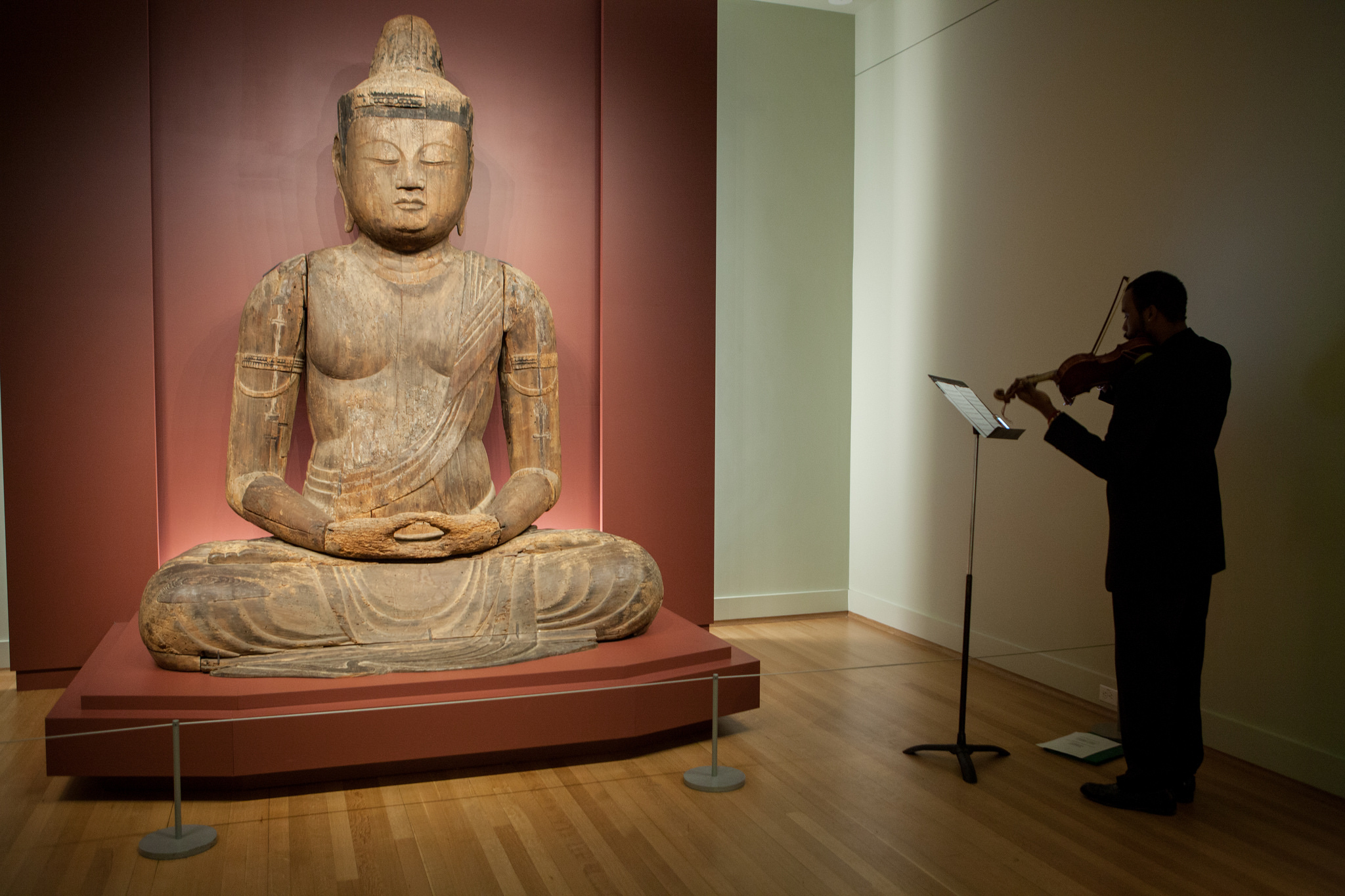
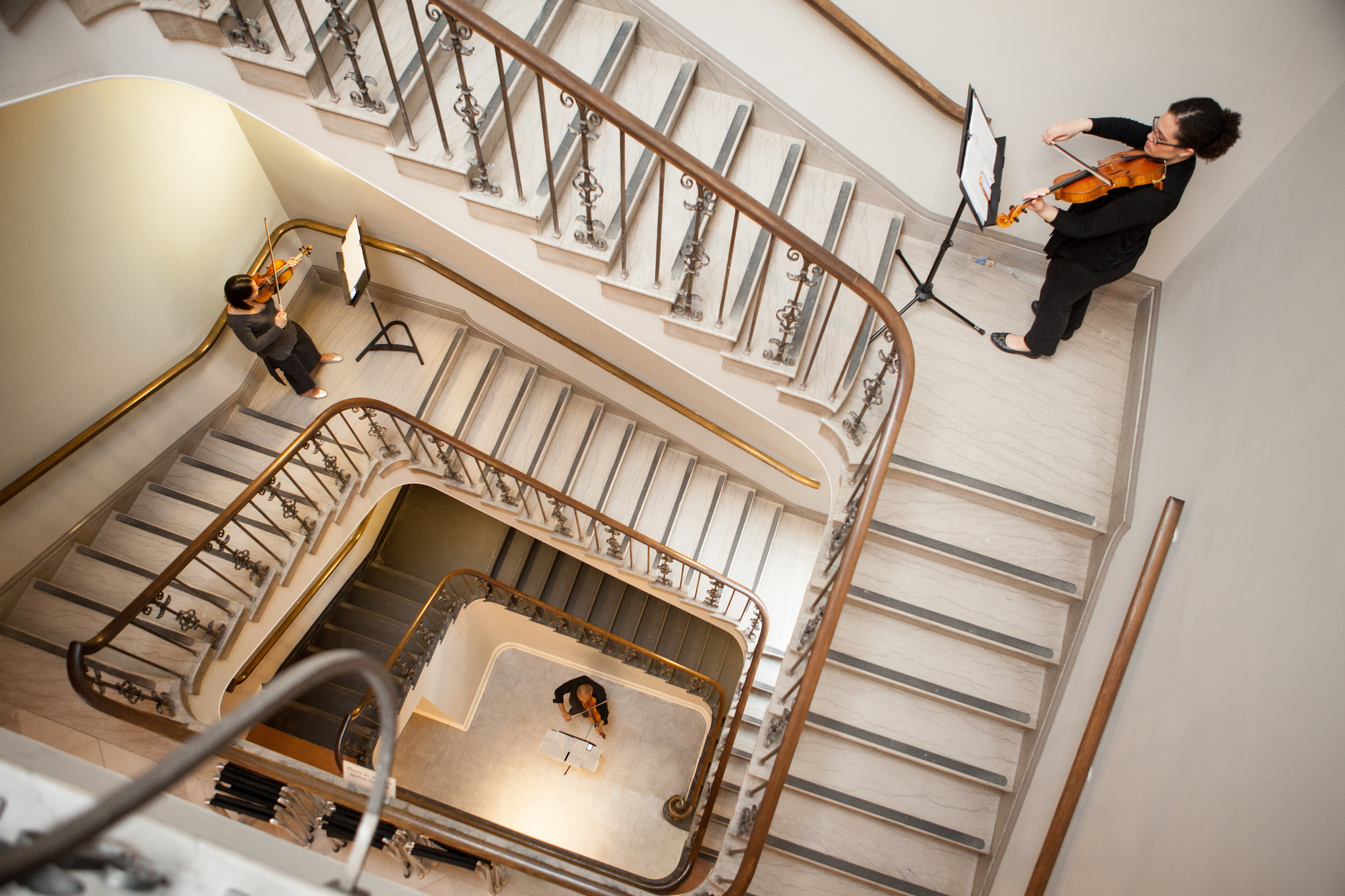
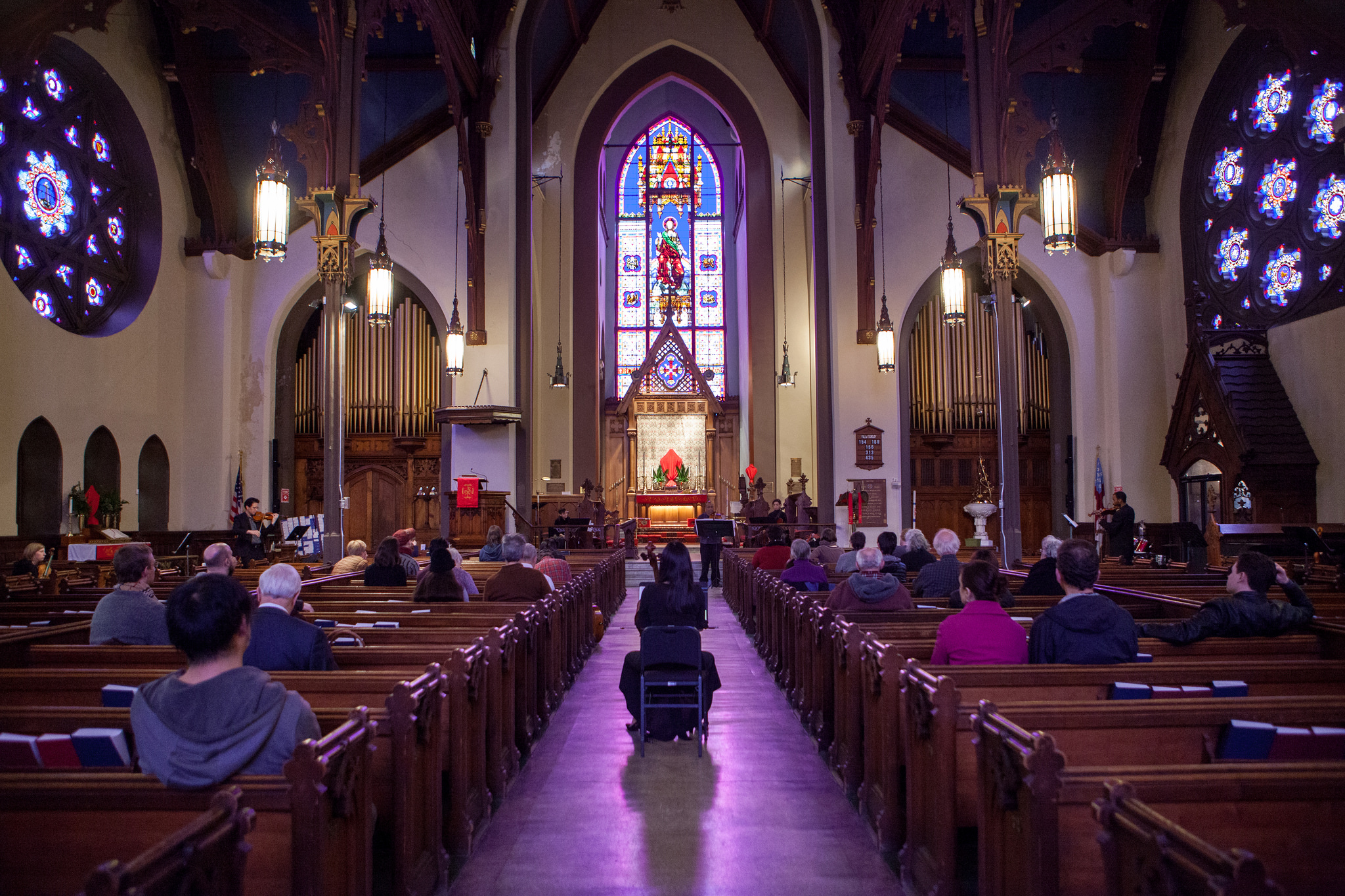
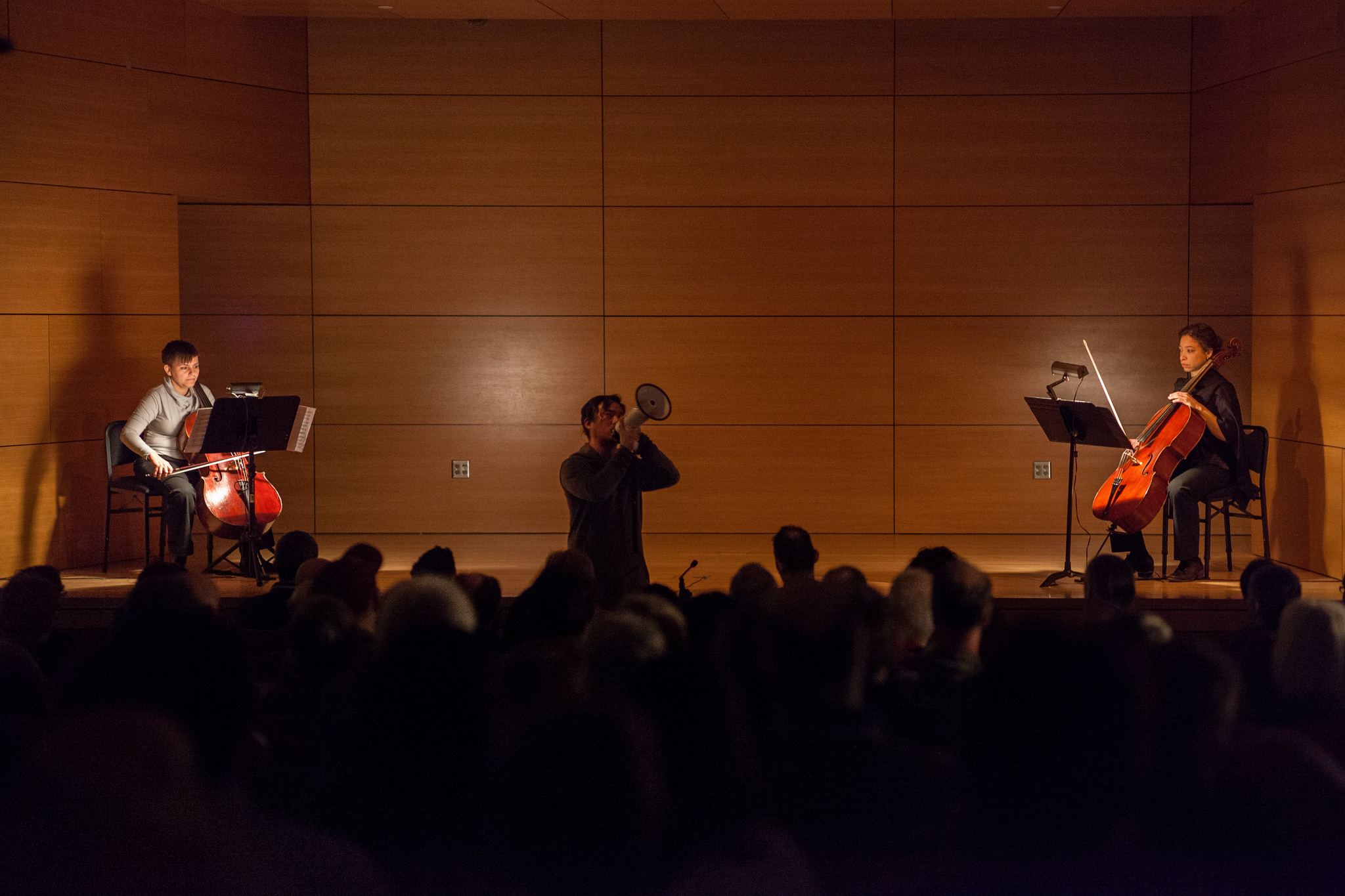
Here’s a sampling of images from our recent collaboration with composer Ken Ueno on the commissioned Four Contemplations piece performed in several Providence locations: The RISD Museum Gallery, All Saints Memorial Church and the Metcalf Auditorium. See the full set of photos by Jori Ketten in our Flickr account. Watch a short video from the RISD Museum gallery installation here.
Boston Globe: Ueno’s “Inventive New Work”In anticipation of this weekend’s series of events premiering the Community MusicWorks commissioned piece by Ken Ueno, the Boston Globe published this teaser for Ueno’s “inventive new work”: “Four Contemplations” takes as its subject the museum’s ancient Dainichi Buddha and will unfold in three iterations. Ueno and 11 MusicWorks players will play the piece on Thursday in four 30-minute chunks in the museum’s Asian art galleries. The following Sunday, they will present it as an hourlong piece in the museum’s concert hall. The music will be recorded during these performances and at a later date will be accessible on the museum guide in the galleries. The piece was not only inspired by the Dainichi Buddha and by meditation practices but was also “influenced by my recent attempts to compose music specific to architectural spaces and people moving through those spaces,” Ueno wrote in an e-mail. Learn more about each event and make your reservations here. How to Think About Oneness: Let Us Count the Infinite Ways
Give composer Ken Ueno five minutes and he can find a way to link Buddhism, Mongolian throat singing and Robert Kennedy. Give him another five and he’ll weave in molecular gastronomy and gang violence. Next he’ll add James Joyce and Ovid, the Roman writer. If his life takes this form of polyglottal all-inclusiveness, then so does his art. If nothing is out of bounds, then everything is drawn into his art. What’s fascinating is that Ueno’s theme, when he comes to Providence later this month, is meditation. Traditionally meditation acknowledges our flurry of stimulating ideas, desires, ambitions, and asks us to narrow down, focus and ultimately empty the mind to achieve a state of unity and release. With Ueno’s energy, it might be challenging for him to calm his creative system. But the other part of the visionary meditative state is the realization that everything is connected, part of the One. And Ueno’s passion is definitely for making connections. Ueno’s “Four Contemplations,” commissioned by Community MusicWorks and presented from March 26-29, will be total immersion into Ueno’s fascinating, floating world. The work will initially be set in the RISD Museum, where eleven classical players in Community MusicWork will perform in 30-minute segments while moving around the Asian galleries. Listeners will also be filtering in and out, music will bleed from one gallery to another. The vocals will be unlike any other: Ueno specializes in Tuvan throat singing and other radical vocal extensions. Presiding over the world of difference will be RISD Museum’s treasure the Great Buddha who, due to renovation, was absent and is now returning to presence. Known as a cross-disciplinary composer, Ueno’s jumping off point was the Dainichi Nyorai Buddha in state of bliss. His four segments correspond with the four main dharmas of meditation: contemplation on mindfulness, body, feelings, and thoughts. While not a practicing Buddhist like his father, Ueno’s extended vocal techniques require great discipline of breathing, which easily makes the connection with meditation. Born to Japanese parents in the US, Ueno has lived in Japan, Switzerland, Brussels, Paris, Rome and Berlin. He spent a year in Providence teaching at UMass Dartmouth and is now living in Berkeley, CA. “I’ve been in exile my whole life,” he says. This sense of the cosmopolitan ungroundedness is part of the impetus of his cosmopolitan creation. “Sometimes I feel both Japanese and American, sometimes neither. ‘Not belonging’ is my natural state. Art has helped me create a center, an autonomous sense of self. My art practice organically floats between architecture and sound and improvisation and written music and classical, experimental noise,” he says. During the weekend, Saturday’s All Saints concert will be an interactive event with CMW musicians and students. How will the students approach throat singing, which stems from an ancient Mongolian tradition, and his soundscapes? Ueno, who is a professor of music at UC Berkeley, dislikes talking down to people of any age, race or class. He remembers how silly adults used to speak baby talk when he perfectly understood their words. He advocates that meaning in art, when authentically created, can be understood by any audience. Feeding people sweet Hollywood melodies guarantees they will only understand sweet Hollywood melodies. Ueno cites an experience from his younger days while teaching in a halfway house for delinquent teenagers and former gang members. While Ueno gained respect, keeping the students’ attention was a trial. His moment of revelation came unexpectedly. One day he played a recording of “Quartet for the End of Time,” a notoriously difficult chamber music piece written by Oliver Messiaen. During those 6 1/2 minutes, the students were held in rapt attention. It was the only time the class was silent. Once it ended, he told them that the music had been premiered in 1941 when Messiaen was a POW camp in Görlitz, Germany after being captured by the Nazis. The gang members had already grasped the essence of the shared experience, through their own months of incarceration. “If the music is good enough, it doesn’t matter how radical it is. It can communicate to almost anyone.” As challenging as his music might be, Ueno is a believer in its beauty and power. “If you work from an authentic point of view of something that affects you, that honesty and earnestness will translate. I write music I think is beautiful. It is weird, sure. There are other things about sound, discovering sound, inventing technique that might be unusual. The lesson is: radical need not be uncomfortable.” –Jill Pearlman More information and links to reservations for Four Contemplations events here. Phase II at Musical Flexplorations
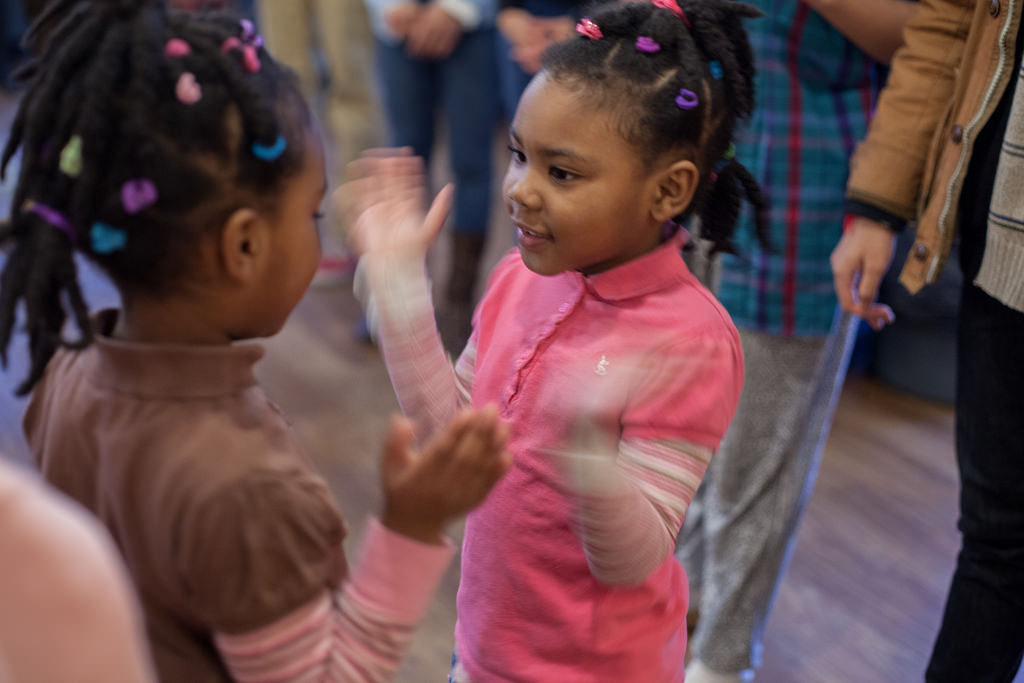
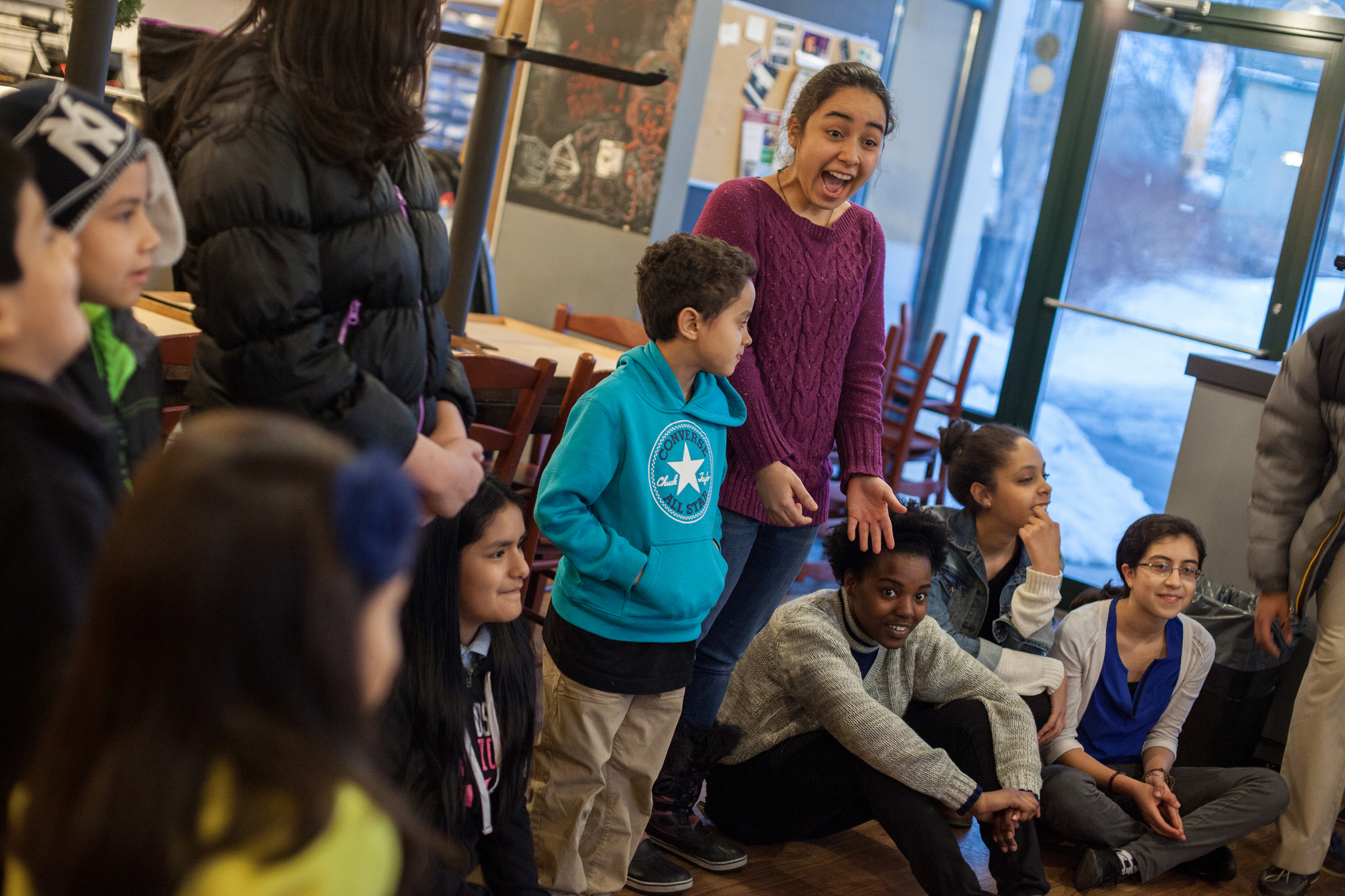
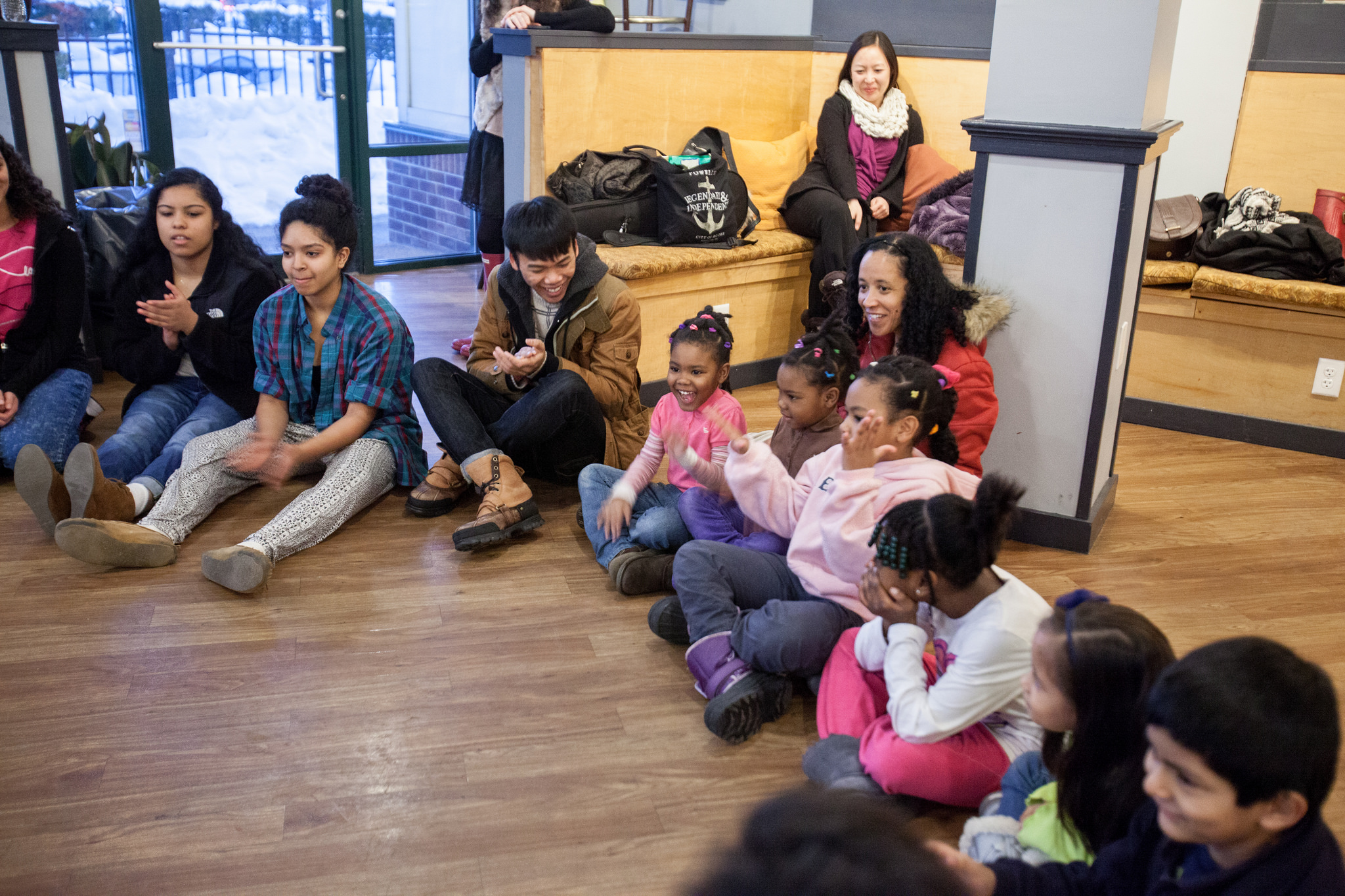
Last Friday, Phase II guest taught CMW’s Drop-In class, Musical Flexplorations. We had a great time introducing some wonderful kids and their parents to the Phase II experience – playing and listening to music, eating dinner together, and engaging in discussion.
Among other activities, Jesse taught the basics of rhythm machine to our young friends, and Federico and Nohely explored the concepts of rules and fairness through a cookie-based activity.
It was a lot of fun, and we were well rewarded with hugs after the group dinner. Hopefully, we’ll see all of the drop-in kids with CMW instruments in their hands before long! –Chloe Kline, with Phase II |